

Choosing the right chairs for your café is one of those decisions that quietly makes a huge impact. It's about so much more than just giving people a place to sit. Think of your chairs as a silent host; they're the very first physical touchpoint a customer has with your brand, and they set the stage for everything that follows.
How the Right Chairs Shape Your Cafe Experience
The perfect chair can turn a quick coffee stop into a long, comfortable stay, which is fantastic for your bottom line and for building a loyal following. Your seating is essentially the handshake of your establishment—it’s a powerful first impression that defines the customer's journey before they’ve even tasted your coffee.
Picture the difference between hard, upright wooden chairs and deep, upholstered armchairs. The first type is perfect for a bustling city-centre spot focused on quick turnover and takeaway orders. The second, however, invites guests to get comfortable, order another round, and maybe even indulge in a slice of cake. This isn't an accident; it's a strategic choice that directly shapes customer behaviour and, ultimately, your revenue.
More Than Just a Place to Sit
The chairs in your café are a core part of its identity and operational flow. They have to work seamlessly with your decor, lighting, and menu to create a single, cohesive vibe. A mismatched or uncomfortable chair can throw off the whole atmosphere, no matter how amazing your brew is.
Here’s what your seating is really doing:
- Defining Ambiance: Chairs are a massive visual cue. Sleek metal chairs scream industrial and modern, while warm wooden ones give off a rustic, cosy feel.
- Influencing Dwell Time: Comfort is everything. It's simple: when people are comfortable, they're far more likely to stay longer and spend more. Discomfort is one of the top reasons a customer won't come back.
- Optimising Space: The size and style of your chairs have a direct say in your seating capacity and floor plan. The right choice helps you make the most of your space without making it feel cramped or tricky for staff and customers to move around.
At the end of the day, café chairs aren't just an expense; they're an investment in the customer experience. They're a functional piece of your brand's story, silently encouraging guests to stay, enjoy, and return.
Finding Your Cafe's Perfect Style and Material
Your café chairs are talking to your customers long before you do. Even before they get a whiff of that freshly ground coffee, the chairs have already set the scene, making a visual promise about the experience they’re about to have.
Think of it like the opening track of a great album. An upbeat, industrial tune signals energy and urban grit, while a soft acoustic melody suggests a place to relax and unwind. Your chairs are the soundtrack to your café; they're not just places to sit, they're key players in your brand's story.
This is especially true in South Africa's buzzing hospitality scene. The local furniture market for hotels, restaurants, and cafés was valued at around USD 10.11 billion in 2022 and is expected to hit USD 12.45 billion by 2029. That growth is driven by new spots opening up in hubs like Cape Town and Johannesburg, all fighting to create a standout vibe. And with chairs making up about 35% of those furniture sales, getting them right is a huge piece of the puzzle.
Matching Chair Styles to Your Cafe Vibe
Choosing a style isn’t just about picking what looks good on its own. It’s about finding a design that cranks up the volume on your cafe's unique personality. Each style brings its own energy to the room.
-
Industrial: This look is all about raw, honest materials like dark metal and rugged, distressed wood. Think Tolix-style steel chairs or simple wooden seats with visible bolts and welds. It creates a rustic, urban, and slightly edgy atmosphere that feels right at home in a converted warehouse or a modern city joint.
-
Scandinavian (Scandi): Defined by its minimalist "less is more" approach, Scandi design loves light-coloured woods like beech or ash, clean lines, and simple shapes. These chairs for cafe settings help cultivate a bright, airy, and uncluttered feeling, perfect for spaces that want to feel calm and simple.
-
Mid-Century Modern: With its signature organic curves, slender tapered legs, and iconic designs (like the Eames-style shell chair), this style adds a sprinkle of retro cool. It’s a great fit for cafés aiming for a classic yet trendy look that feels both nostalgic and totally current.
-
Bohemian (Boho): This is an eclectic, free-spirited style that loves natural textures. We’re talking rattan, cane, and wicker, often paired with colourful cushions and textiles. Boho chairs create a relaxed, artistic vibe that makes customers feel like they've stumbled into a cosy, personal hideaway.
This diagram shows how your chair choice is a balancing act between the atmosphere you want, the layout you have, and the comfort your guests need.
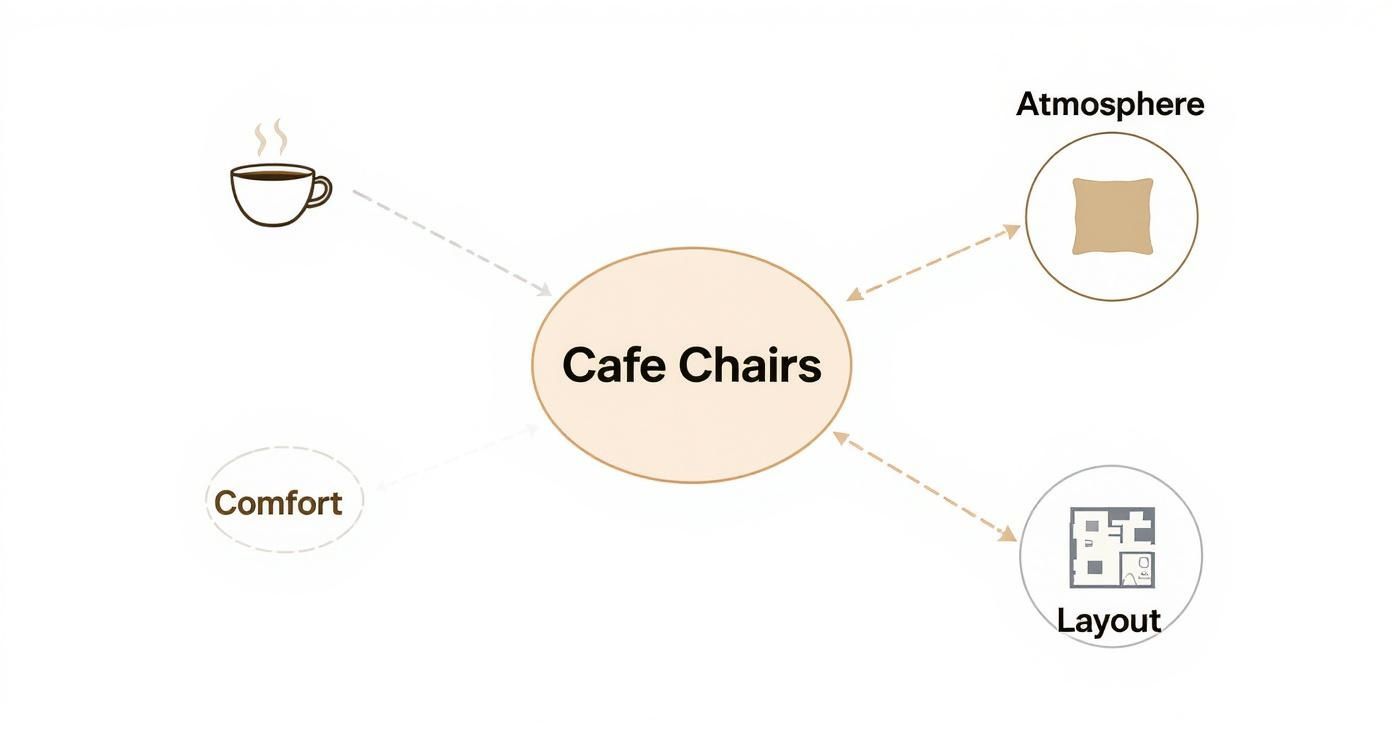
As you can see, all these elements are linked. A decision you make about style will directly affect everything else.
The Practicality Behind the Prettiness: Material Matters
While style sets the mood, the material is what determines how your chairs will hold up to the daily grind. The right choice has to look good, but it also has to be tough, easy to clean, and fit your budget. It’s a practical decision with long-term consequences.
Choosing a chair material is like picking a team member. You need someone who fits the company culture (your style), but they also have to be reliable, tough, and not need constant supervision (low maintenance).
Let's break down the most common options and see what they bring to the table.
Cafe Chair Material Comparison
| Material | Pros | Cons | Ideal Cafe Setting |
|---|---|---|---|
| Wood | Warm, classic look; very versatile; durable hardwoods (oak, beech) | Can scratch or dent; may require refinishing; heavier | Cosy, traditional, or rustic cafes aiming for a timeless feel. |
| Metal | Extremely durable; easy to clean; often stackable; lightweight options (aluminium) | Can feel cold or hard without cushions; may dent or rust if not treated | High-traffic, industrial, or modern cafes; great for outdoor patios. |
| Plastic (Polypropylene) | Affordable; lightweight; huge range of colours & styles; weather-resistant | Can feel less premium; susceptible to scratching; may fade in direct sun | Casual, modern, or family-friendly cafes; excellent for indoor/outdoor use. |
| Upholstered | Superior comfort; adds a touch of luxury; good for noise absorption | Prone to stains & spills; requires regular cleaning; fabric can wear out | Lounges, upscale cafes, or spots where you want guests to linger. |
Ultimately, the best material is one that supports your vision without creating a maintenance nightmare for your team.
Here's a closer look at what each material offers:
-
Wood: Wood is a timeless classic, bringing a natural warmth that's hard to beat. Hardwoods like beech and oak are incredibly tough and can handle the busiest of services. For a closer look at their charm, check out our guide on the appeal of wooden tables and chairs. While they can be stained or painted to match any decor, they might need a bit of TLC to prevent scratches over time.
-
Metal: When it comes to pure durability, steel and powder-coated aluminium are the undisputed champions. They’re a breeze to wipe down, incredibly sturdy, and often stackable, which is a lifesaver for storage and cleaning. Metal chairs are the backbone of the industrial aesthetic but can also be designed to feel incredibly sleek and modern.
-
Plastic (Polypropylene): Don't write off plastic! High-quality moulded plastic is a fantastic option. It's lightweight, easy on the wallet, surprisingly resilient, and comes in a rainbow of colours and modern shapes. Many are also UV-resistant, making them a brilliant, flexible choice for both your indoor and outdoor seating areas.
-
Upholstered: For pure, sink-in comfort, nothing beats an upholstered chair. Soft seats covered in fabric or leather are an open invitation for customers to stay for another coffee. The trade-off? They require more upkeep, as spills are just a part of café life. Always opt for commercial-grade, easy-clean fabrics to save yourself future headaches.
Why Comfortable Seating Means Better Business
Sure, style sets the mood and gets people through the door. But it's comfort that convinces them to stay.
Think of it this way: a beautiful chair is an invitation, but a comfortable one is a reason to order that second flat white, add a slice of cake, or lose track of time catching up with a friend. This is where ergonomics—the science of designing for human efficiency and comfort—becomes one of your most powerful business tools.
An uncomfortable chair is a silent profit killer. If your customers are constantly fidgeting or shifting to find a good position, their mind isn't on your delicious menu or the great atmosphere you've created. It's on their aching back. This has a direct knock-on effect on their "dwell time", which is just a fancy way of saying how long they stick around. And the longer they stay, the more they're likely to spend.
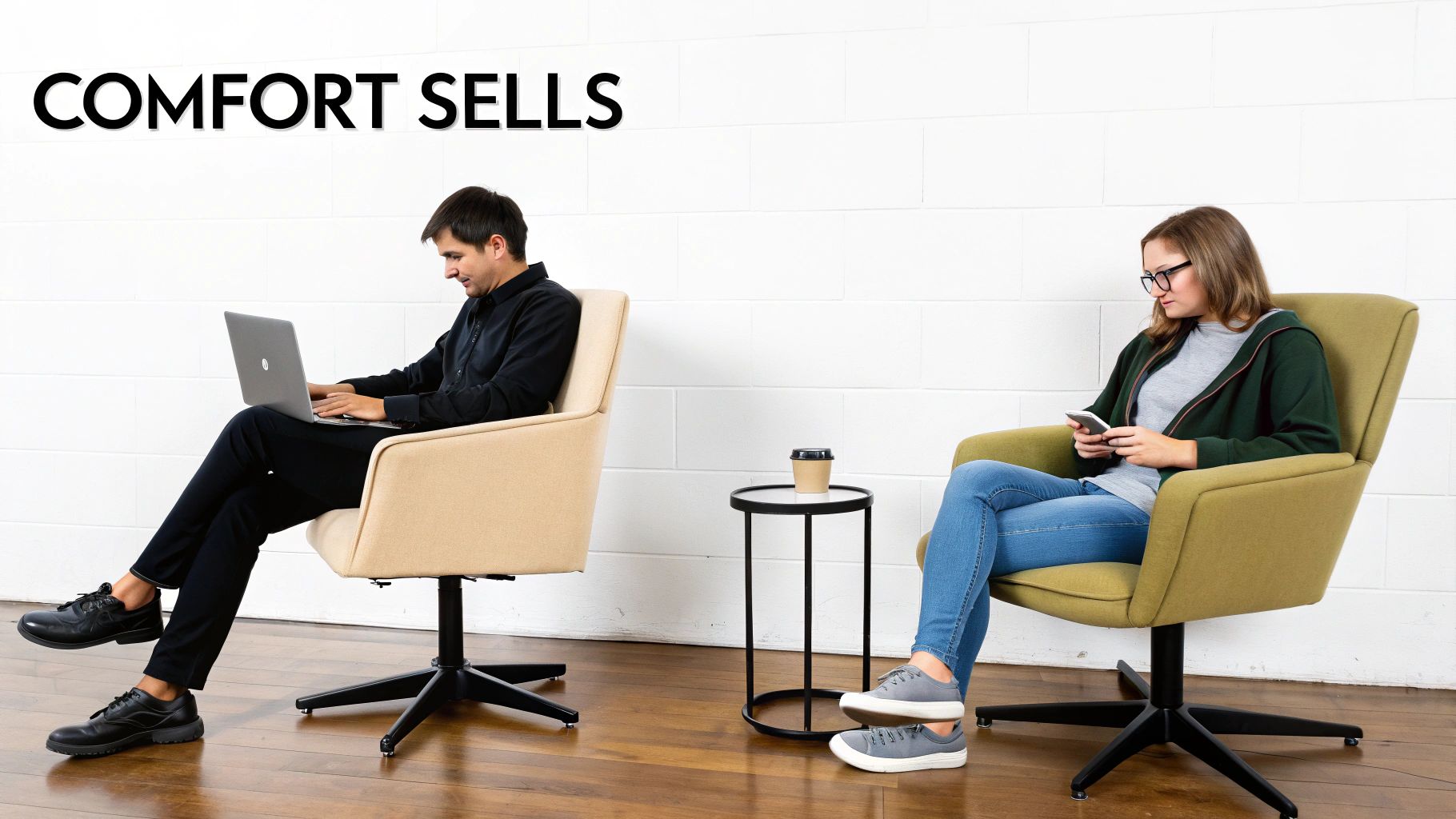
The Direct Link Between Comfort and Profit
Ergonomics isn't about throwing a few plush cushions around. It’s about the fundamental design of your chairs and how they support the human body. Getting a few key dimensions right reduces physical strain and creates a sense of ease that translates directly into a healthier bottom line.
Pay close attention to these crucial factors:
-
Seat Height: The sweet spot allows someone to sit with their feet flat on the floor and their knees bent at a comfortable 90-degree angle. The standard to aim for is around 45-48 cm. Too high, and their feet will dangle; too low, and their knees will be pushed up awkwardly.
-
Seat Depth: This measures from the front edge of the seat to the backrest. A good depth of about 40-45 cm supports the thighs properly without digging into the back of the knees. A seat that’s too deep is a classic culprit for slouching and poor circulation.
-
Back Support: A well-designed backrest should support the natural curve of the lower spine (the lumbar region). Even a slight, thoughtful curve can make a world of difference over 20 minutes, preventing fatigue and encouraging your guests to truly relax.
Big-name coffee chains have done the research: bringing back cosier, more supportive seating is a core strategy for increasing customer dwell time. When people are comfortable, they visit more often, stay longer, and leave glowing reviews. Your seating can become your best, unspoken marketing asset.
Using Different Chairs to Guide Different Behaviours
Not all comfort is the same. The kind of comfort you provide should match the behaviour you want to see in different parts of your café. You can use various chairs for your cafe as a subtle way to guide the customer experience.
Let's break it down with two common customer types.
The Laptop Worker
This person is here to be productive for an hour or two.
- Chair Type: An upright chair, perhaps with decent lumbar support.
- Ergonomics: A slightly firmer seat and a backrest that encourages an alert posture.
- Goal: You're providing functional comfort that helps them focus. It’s a task-oriented setup.
The Social Catch-Up
This group wants to unwind, chat, and linger.
- Chair Type: Think lower, wider armchairs or a deeply cushioned booth.
- Ergonomics: Softer materials, maybe a gentle recline, and armrests for that extra touch of relaxation.
- Goal: You're creating a cosy, welcoming bubble that says, "it's okay to settle in for a while." This is a leisure-oriented setup.
When you start thinking this way, you're no longer just filling a space with furniture—you're curating an experience. You can create dedicated zones: a few upright chairs near the power outlets for the workers, and comfy nooks tucked away for the socialisers. This clever approach makes sure every customer finds their perfect spot, maximising their satisfaction and, in turn, your revenue. The right seating is an investment that pays for itself, every single day.
Here is the rewritten section, crafted to sound like an experienced human expert in a natural, engaging tone.
Optimizing Your Floor Plan with Smart Seating
Ever walked into a café and just felt… awkward? Maybe you had to squeeze past other tables, or the staff kept bumping your chair. That’s a floor plan problem, and it’s one of the quickest ways to ruin the customer experience. Your layout isn't just about where things go; it's the invisible script that guides how people move, feel, and interact in your space.
The right chairs are your secret weapon here. They dictate the flow, the vibe, and ultimately, how many happy customers you can serve. It’s a classic balancing act: you need enough seats to make money, but not so many that people feel like they’re sharing a table with strangers. A guest who feels cramped is a guest who won't linger for that extra slice of cake. The goal is to create a space that feels buzzy and alive, not just busy and cluttered.
Mapping Your Space for Maximum Flow
Before you even think about placing a chair, grab a piece of paper and sketch out your floor plan. The first thing to map isn't the tables, but the pathways. Think of these as the main roads through your café – from the door to the counter, to the tables, and to the loo.
You need to keep these arteries clear. A good rule of thumb is to leave at least 90 cm for your main walkways. This gives enough room for two people to pass without doing that awkward side-shuffle and allows your staff to move quickly with trays full of coffee. Once you’ve marked out these non-negotiable routes and any fixed objects like support pillars, you'll see the natural zones where your seating can go.
The real measure of a great floor plan isn't how many chairs you can cram in. It's about how comfortably you can seat your guests. A layout that gives people a bit of breathing room will always win, encouraging customers to stay longer and spend more.
Choosing Chairs That Fit Your Floor Plan
The actual size of your chairs is a massive factor. A chair that’s just 5 cm wider might not seem like a big deal, but multiply that by 20 or 30 chairs, and you’ve suddenly lost a whole table or created a frustrating bottleneck.
Luckily, different chair styles are built to solve different space puzzles.
- Armless Chairs: These are the MVP of space-saving. With no arms, they tuck right under the table and let you place settings a little closer together. They’re brilliant for small two-seater tables where you want to maximise your floor space.
- Stacking Chairs: If your café doubles as an event space or you like to switch things up, stacking chairs are a game-changer. You can clear a whole section in minutes, giving you incredible flexibility.
- Slim Profile Chairs: Think of those sleek, minimalist chairs with thin legs. They take up less physical and visual space, which can make a small café feel much bigger and more open.
Creating Diverse Seating Arrangements
One size rarely fits all in a café. A great space offers different seating 'zones' for different types of customers – the laptop-tapper, the couple on a date, the group of friends catching up. Your chairs for your cafe are what define these zones.
Here are a few ideas to get you started:
- Intimate Two-Tops: Small tables paired with compact, armless chairs are perfect for couples or one-on-one meetings. They feel private and make the most of your square meterage.
- Communal Tables: A long, shared table is fantastic for solo customers who don't want to take up a whole table and for big, bustling groups. Pairing a bench on one side with individual chairs on the other offers great flexibility.
- Window Seats: Don't waste that prime real estate! A counter along the window with a row of smart bar stools creates the perfect spot for people-watchers and solo visitors.
- Cosy Nooks: Got an awkward corner? Turn it into a feature. Pop in a couple of comfy, soft armchairs and a low coffee table. You’ve just created a premium lounge spot that encourages people to settle in and stay a while.
Selecting Durable Chairs for Indoor and Outdoor Use
Think of a café chair not just as a place for someone to sit, but as one of the hardest-working pieces of equipment you own. It has to endure constant use, day in and day out. Choosing chairs that are built to last isn't just about avoiding a wobbly leg here and there—it's a savvy financial move that protects your investment and keeps your space looking sharp, whether it's a cosy indoor corner or a sun-drenched patio.
Of course, durability means different things in different settings. An indoor chair has to stand up to a relentless cycle of shuffling, spills, and wipe-downs. An outdoor chair, on the other hand, is in a constant battle with the sun, rain, and fluctuating temperatures. The trick is to match the materials and construction to the specific challenges each chair will face.
The South African furniture market is booming, expected to pull in US$1.51 billion in 2025, thanks in large part to our vibrant hospitality scene. This growth means more local cafés are looking for chairs that not only follow international design trends but also have the grit to handle our unique climate. Durability has become a top priority.
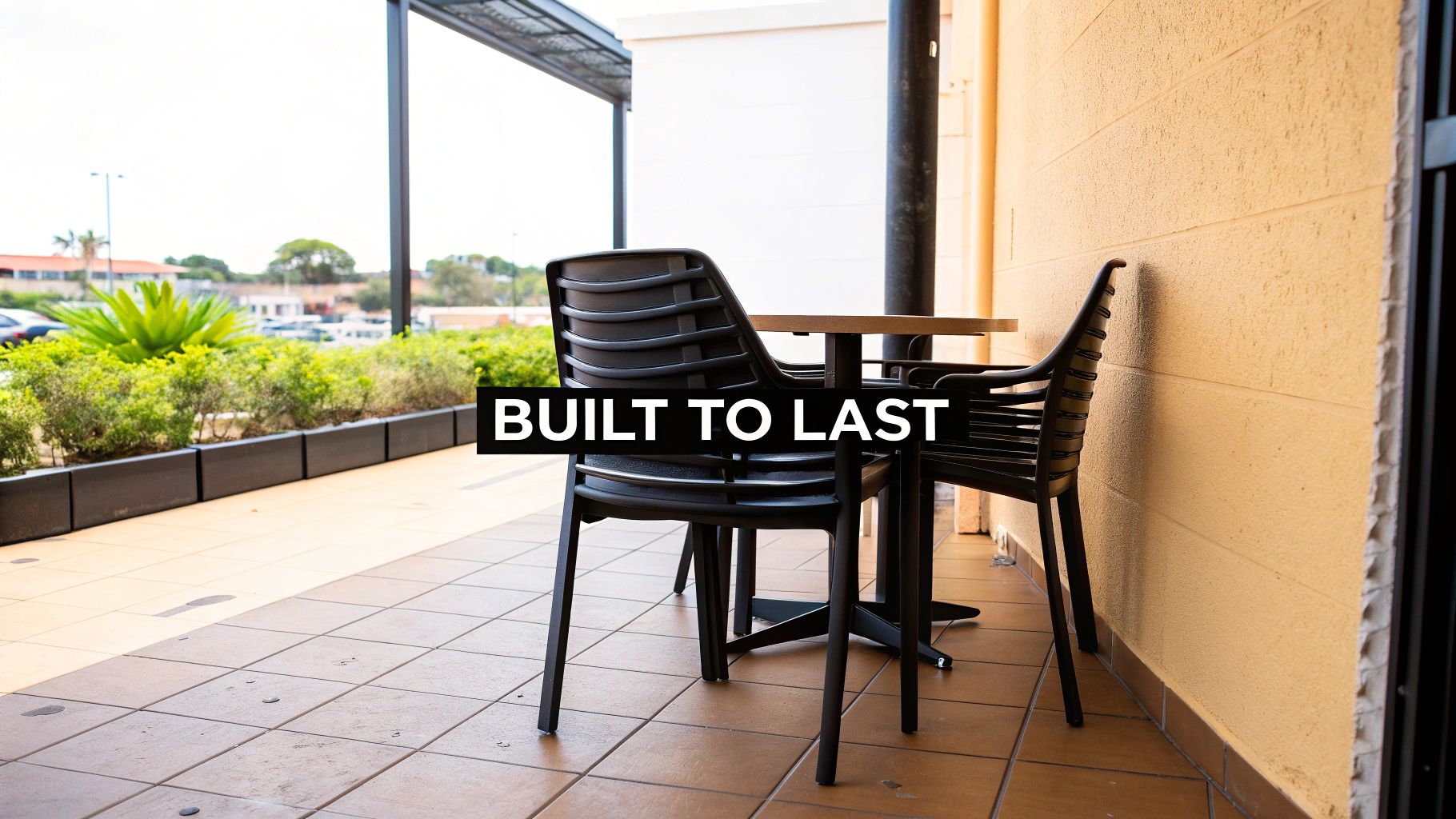
Fortifying Your Outdoor Seating Area
Outdoor seating can be a massive drawcard for any café, but it demands chairs that can brave the elements without fading, rusting, or simply falling apart. Mother Nature is the ultimate stress test, so you'll want to look for a few non-negotiable features.
- UV-Resistant Materials: The sun's rays can be brutal, bleaching colours and making plastics brittle over time. Look for materials like high-quality polypropylene or resin that have been specifically treated for UV resistance to keep them looking vibrant.
- Weatherproof Metals: Not all metals are up to the task. You'll want to go for powder-coated aluminium or galvanised steel. That powder coating acts like a tough, protective shield against moisture, which is your best defence against rust and corrosion.
- Treated Hardwoods: If you love the natural look of wood, choose species like teak or balau, which are naturally resistant to moisture and insects. Just make sure they're finished with a quality outdoor sealant to protect them from the harsh South African sun.
When you're dealing with larger patio areas, thoughtful planning is key. You can find some great ideas for creating welcoming exterior spaces in our guide to choosing outdoor lounge sets.
A classic mistake is using indoor chairs for "occasional" outdoor use. It only takes one unexpected downpour or a few weeks of intense sun to permanently damage a chair that wasn't built for it, forcing you into a costly and premature replacement.
Ensuring Longevity for Indoor Chairs
Indoors, your chairs face a different kind of battle—one of constant, high-frequency use. Here, the focus shifts from weather resistance to solid structural integrity and finishes that can handle the daily grind.
For indoor chairs for cafe settings, strong construction is everything. Check for reinforced joints, especially where the legs and backrest connect, as these are the most common points of failure. Joints that are glued, screwed, and dowelled are in a different league of strength compared to those just held together with staples.
The finish is just as crucial. A scratch-resistant lacquer on wooden chairs or a durable powder coat on a metal frame will keep them looking fresh for much longer. And if you're going for upholstered seats, always choose commercial-grade fabrics. They are specifically rated for high traffic and are a breeze to clean, a small detail that will save you countless hours of maintenance down the line.
To make the decision a bit easier, here’s a quick checklist to compare your priorities for indoor versus outdoor chairs.
Indoor vs. Outdoor Cafe Chair Checklist
| Feature | Indoor Chair Priority | Outdoor Chair Priority |
|---|---|---|
| Material Resilience | Focus on scratch and stain resistance. | Must be UV-resistant, waterproof, and rust-proof. |
| Construction | Look for reinforced joints to handle constant movement. | Joints must withstand temperature fluctuations without warping. |
| Weight & Portability | Lighter for easy cleaning and rearranging. | Heavier to prevent being blown over by wind. |
| Finish | Durable lacquer or powder coat for high-touch areas. | Sealants and coatings must protect against sun and rain. |
| Upholstery | Commercial-grade, easy-to-clean fabrics. | Quick-drying, fade-resistant, and mould-proof fabrics. |
| Maintenance | Easy to wipe down and clean daily spills. | Requires periodic deep cleaning and potential re-sealing. |
This checklist helps highlight that while both need to be tough, the type of toughness required is fundamentally different. Choosing correctly from the start saves a lot of headaches later on.
Your Guide to Sourcing and Budgeting Cafe Chairs
Alright, you’ve got a handle on the crucial roles style, comfort, and durability play in picking the perfect chairs for a cafe. Now it’s time to get down to brass tacks: sourcing and budgeting. This is where your vision meets the real world, and making smart financial decisions is key.
It’s easy to get fixated on the price of a single chair, but that’s a common mistake. A sustainable budget looks at the bigger picture, factoring in the chair's lifespan and any potential maintenance costs. Getting this right means your seating becomes a lasting asset, not a nagging, recurring expense.
Exploring Your Sourcing Options
There’s more than one way to furnish your space, and each path comes with its own pros and cons. The right choice for you will boil down to your brand, your budget, and your long-term plan. Let’s break down the most common routes.
-
Buying New: This is the most direct approach. You get brand-new, untouched chairs, usually with a warranty, and you can order the exact style and quantity you need. It's the perfect way to lock in a consistent aesthetic, especially if you’re launching a new brand and want to make a strong statement from day one.
-
Sourcing Second-Hand: Going for used chairs can be incredibly cost-effective, letting you snag higher-quality pieces for a fraction of what they’d cost new. This is also a brilliant way to cultivate a unique, eclectic vibe. It does take a bit more legwork to find matching sets, and you’ll need to give each chair a thorough inspection for wear and tear, as warranties are rarely part of the deal.
-
Hiring or Leasing: If you're running a pop-up, a one-off event, or just want to test a concept before going all-in, hiring chairs offers fantastic flexibility. It drastically cuts down your initial investment and usually includes delivery and collection. For anyone thinking along these lines, looking into hiring chairs near me is a great way to find a flexible and budget-friendly solution to get started.
Your sourcing strategy really says a lot about your business priorities. A sleek, brand-new cafe might invest in custom chairs to cement its identity, while a quirky, independent spot could build its entire character around unique second-hand finds.
Crafting a Realistic Seating Budget
Building a smart budget is more than just simple multiplication. You need to think about the Total Cost of Ownership (TCO), which gives you a much truer sense of what your chairs will really cost you over their lifetime.
A cheap chair that falls apart in two years is far more expensive in the long run than a sturdier, pricier one that lasts a decade. In fact, studies on cafe chair lifespans show that well-built chairs can last nearly ten years with proper care, even with heavy use. In contrast, poorly assembled ones often fail much sooner, not because of a bad design, but because of shortcuts in how they were put together. It just goes to show that initial build quality is everything.
To figure out your TCO, you need to look at these factors:
- Initial Purchase Price: This is the straightforward cost per chair multiplied by how many you need.
- Delivery and Assembly Fees: Don’t forget to factor in shipping and whether you’ll need to pay someone to put the chairs together.
- Maintenance and Repair Costs: Think about future expenses. Will they need reupholstering, refinishing, or will you be fixing wobbly legs? Higher quality materials usually mean lower maintenance costs down the line.
- Expected Lifespan and Replacement: Estimate how long the chairs will actually last. A R1,000 chair that lasts two years costs R500 per year. A R3,000 chair that lasts ten years? That’s only R300 per year.
When you start thinking in terms of annual cost, you shift from just spending money to making a strategic investment in your cafe’s future. This approach makes sure your seating works just as hard for your business as you do.
Your Top Questions About Choosing Cafe Chairs, Answered
Picking out the right chairs for your cafe is a careful balancing act between aesthetics, durability, and customer comfort. It’s easy to feel a bit overwhelmed by the choices, so we’ve gathered the most common questions we hear from cafe owners and answered them in a clear, practical way to guide your decisions.
These insights will help you cut through the noise and select seating that’s a perfect fit for your space, your brand, and your budget.
How Many Chairs Should I Plan for My Cafe Space?
A really solid rule of thumb is to allocate between 1.5 to 1.8 square metres per person. This calculation isn't just about fitting people in; it's about making sure there’s enough room for the table, the chair itself, and clear, comfortable pathways for both customers and staff to move around without constantly bumping into each other.
To put that into perspective, a 100-square-metre dining area could comfortably host between 55 and 65 guests. It’s always, always better to prioritise a smooth, uncluttered flow over squeezing in a few extra seats. Do yourself a favour and map your layout on paper first—it’s a crucial step to visualise the space and avoid creating those frustrating bottlenecks.
What Is the Most Durable Material for a Busy Cafe?
For a high-traffic spot where chairs will be used constantly, you can't go wrong with fully welded metal frames made from steel or aluminium. Their robust construction and sheer strength mean they can withstand the daily grind of a busy cafe without breaking a sweat.
If you love the warm, inviting look of wood, be sure to opt for dense hardwoods like beech or oak, and pay very close attention to how the joints are put together. Another top contender is high-quality moulded polypropylene; it’s incredibly durable, a breeze to clean, and versatile enough for both your indoor and outdoor seating areas.
A crucial takeaway from industry studies is that chair failure often stems from poor assembly, not poor design. Even the best materials can fail if the joints are not properly glued and secured, reinforcing the importance of inspecting a sample before buying in bulk.
Should My Cafe Chairs Have Arms or Be Armless?
The best choice here depends entirely on your space and the kind of vibe you want to create for your customers. Each style serves a very different purpose.
- Armless Chairs are fantastic space-savers. They tuck neatly under tables and allow you to fit more seating into a compact area, making them perfect for smaller two-seater tables and those quick-turnover zones.
- Chairs with Arms offer a lot more comfort, sending a clear signal to guests that it’s okay to settle in, relax, and stay a while. This makes them ideal for your cosy lounge areas or more spacious dining spots where you want to encourage a leisurely pace.
Many of the most successful cafes use a smart mix of both, placing armless chairs in bustling areas and tucking armchairs into quiet corners.
How Do I Test a Chair's Quality Before Buying in Bulk?
Whatever you do, never place a large order without getting your hands on a sample first. Ask the supplier to send you a single chair and then put it through a few simple but essential quality checks. First, sit in it for at least 15 minutes to properly get a feel for its comfort and ergonomics.
Next, check its stability by rocking it gently—it should feel completely solid with absolutely no wobbling. Carefully inspect the welds, joints, and finish for any tell-tale signs of poor workmanship. A great cafe chair should feel sturdy and well-built, yet be light enough for your staff to move easily for cleaning. This simple test can save you from a very expensive mistake down the line.
Ready to create an unforgettable atmosphere for your next event without the commitment of purchasing? Explore the stylish and durable seating options at ABC Hire. Find the perfect chairs for your needs at https://abchire.co.za.