
You're probably staring at three quotes already, one from a caterer, one from a rental supplier, and one from the venue, and the headache isn't the menu. It's figuring out how all three will work together on the day without the power tripping, the buffet delaying service, or the chairs arriving after the kitchen has started loading in. In cape catering Cape Town, that's the difference between a polished event and a long, noisy recovery.
Cape Town makes this harder, and also more worth getting right. The city's population grew from 3,740,026 in 2011 to 4,772,846 in Census 2022, a 27.6% increase, and households grew to 1,452,845, with average household size dropping from 3.50 to 3.30 persons according to the City's census trends report (City of Cape Town Census 2022 Trends and Changes). That points to a bigger, denser event market, and the food side of the city backs that up too, with the Food and Beverages subsector valued at R24.11 billion in 2022, equal to 4.1% of Cape Town's total GVA, and supporting 72,465 jobs (Invest Cape Town market intelligence report).
Why Catering Is a Logistics System, Not Just a Menu
A wedding planner once called me from a Stellenbosch estate on a Thursday morning because the caterer, the furniture hire team, and the venue manager had all arrived with different assumptions about access. The chef wanted a clean load-in route. The chair supplier had booked a larger vehicle than the driveway could handle. The venue wanted the main lawn kept clear until the ceremony ended. Nobody was wrong, but the event nearly paid for that lack of coordination.
That's why catering is a logistics system. The menu matters, but it only works when service style, staffing, load-in timing, rentals, and venue rules are stitched together before the first tray leaves the kitchen. If those parts aren't aligned, even a good menu becomes a stress test.
The caterer sits in the middle of the event machine
Food service touches every other supplier. Tables have to be placed before service can begin, climate control needs to sit clear of buffet traffic, and power access has to be in the right place before hot hold equipment is switched on. A useful reference point for this kind of thinking is the broader event design workflow for weddings, because the layout decisions and the catering decisions are really one conversation.
That's also where a rental partner becomes part of the catering brief, not an afterthought. Chairs, tables, urns, fridges, and climate control aren't separate “extras”. They affect where the kitchen can land, how fast dishes move, and whether service stays smooth when the weather turns.
Practical rule: if the caterer can't explain how they'll move from load-in to first service without stepping on the rental team's timeline, the brief isn't ready.
For Cape Town events, the old habit of treating food as a standalone purchase causes avoidable problems. A better approach is to ask, “What does this menu require on site?” before asking, “What does this menu cost?” That small change keeps the planning honest.
If you're scoping equipment alongside food, the catering equipment for hire angle matters because the physical setup often decides whether the kitchen can operate efficiently at all. In practice, the best events are planned as one operating system, not a handful of separate invoices.
Setting Your Budget and Menu Brief
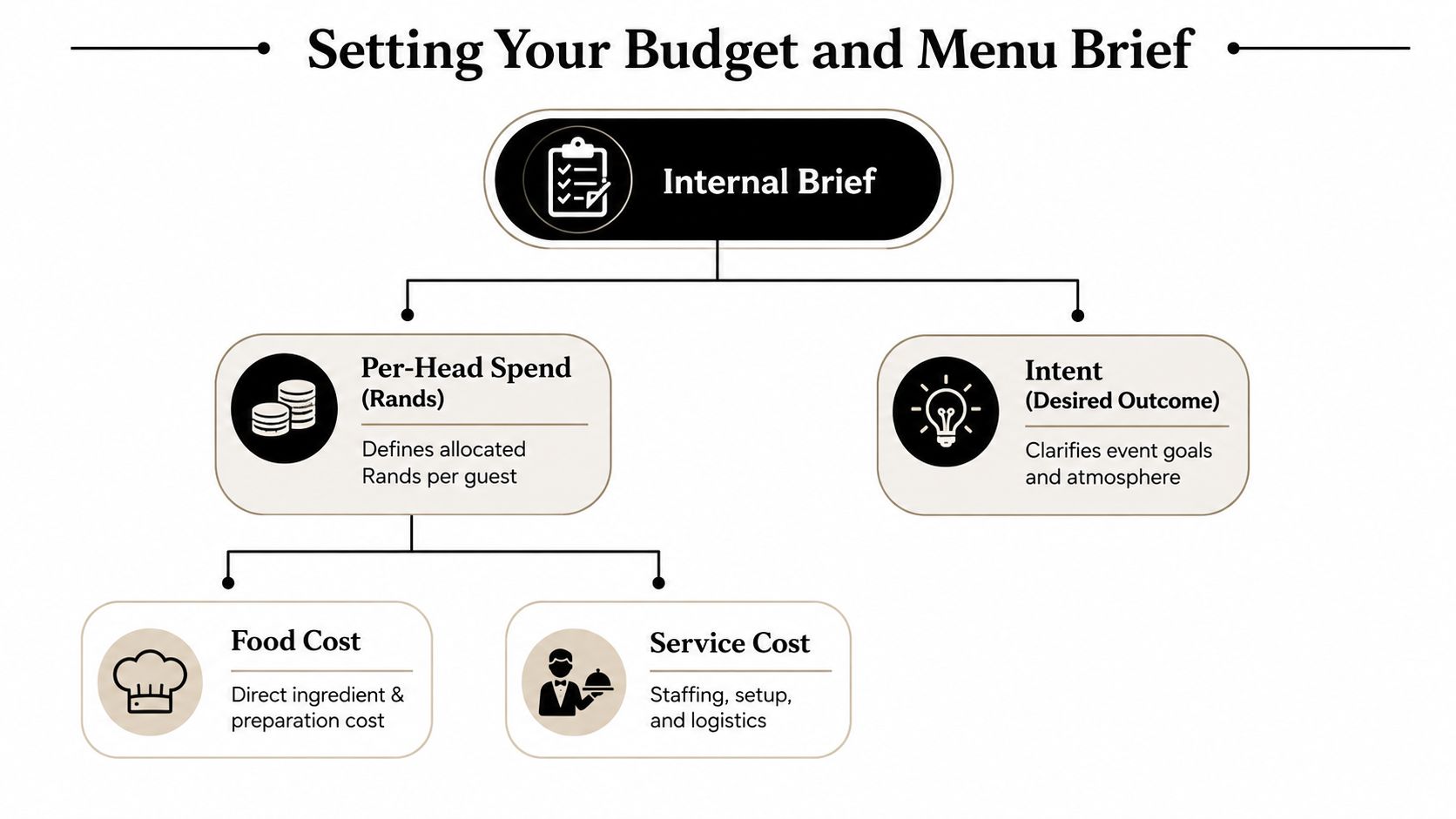
A good budget brief does two jobs at once. It protects the numbers, and it gives the caterer enough context to quote accurately. If you only ask for “price per head”, you usually get a number that hides underlying costs in staffing, service style, and rentals.
For a 120-guest wedding in Stellenbosch, the right starting point is not a menu list. It's a one-page internal brief that names the guest count, the service style, the atmosphere you want, the must-have dishes, and the parts of the event that cannot flex. That brief should separate food, service, and the rental layer, because tables, chairs, climate control, and cold storage can change the quote as much as the ingredients do.
Write the brief like a working document
The most useful brief is short enough that everyone reads it and specific enough that nobody has to guess. I'd include these items:
- Guest count and event type. A wedding, launch, or matric dance does not behave the same way on site.
- Service style. Plated, buffet, stations, or family-style each creates different staffing and rental needs.
- Must-haves. This might be a formal starter, a late-night snack, or a specific dessert format.
- Deal-breakers. Slow service, single-use packaging, or a menu that cannot support dietary requests should be flagged early.
- Working budget range. Not a fantasy ceiling, a real range you can sign off against.
Cape Town quotes also get distorted when planners compare one number and ignore the setup layer. A plated dinner with full service staff, for example, creates a different operating cost than a buffet that needs extra equipment, table space, and queue management. The rental line is often where planners regain control, because furniture and climate control can be chosen to support the menu instead of fighting it.
This is also where a measured supplier conversation helps. Many independent caterers in Cape Town rely on strong owner or manager capability, good supplier relationships, internet use, and disciplined control of materials and production processes, which means the clearer the brief, the cleaner the quote. If you hand over a vague wish list, you get a vague estimate back.
A useful instinct here is simple. Build the brief first, then ask for proposals that fit the brief, not the other way around.
Choosing the Right Service Style
The wrong service style is expensive because it multiplies everything else. It changes how many staff you need, how much space the venue must give you, whether you need more tables or more circulation room, and how forgiving the event is if the weather turns warm or cold.
Match the format to the room and the day
Plated service works best when the guest count is controlled and the room can support a proper service rhythm. It looks polished, but it needs tighter kitchen timing, more staff, and a venue that can handle coordinated plating windows. It's usually the cleanest choice for formal weddings and high-touch corporate functions where timing matters.
Buffet service gives guests choice and can be easier for mixed dietary needs, but it only works when the room can absorb movement. If the queue cuts across the dance floor or bar, the event feels disjointed. In a warmer Cape Town afternoon, buffet lines also need smart placement so food stays presentable and guests don't bunch near the heat.
Family-style can feel warm and generous, especially for milestone birthdays and some weddings, but it demands more servingware and a stronger table-turn plan. It looks relaxed on paper, yet it still needs discipline behind the scenes.
Food stations are often the most flexible for corporate launches and younger social events, but they add pressure on furniture planning, power, and space. They work when the venue layout supports movement and the caterer has enough staffing to keep the stations fresh.
Climate changes the decision
A hot November afternoon in Cape Town is not the same operational problem as a June evening. Temperature affects hold times, guest comfort, and how long people linger near food. That means the service style should be chosen with the venue, season, and guest flow in mind, not just the look of the table styling.
If the room has awkward circulation, the “most beautiful” format often becomes the slowest one to serve.
For weddings, plated service often suits the formal part of the day, while stations can work better for relaxed receptions. Corporate events usually benefit from faster guest movement and cleaner time management. Matric dances need speed, durability, and a layout that keeps queues from collapsing into the dance floor. The style that looks best on mood boards is not always the style that survives real service.
Running a Tasting That Actually Decides Things
A tasting should produce decisions, not more opinions. If everyone leaves saying “that was lovely”, but no one has locked the menu, confirmed portions, or tested the venue realities, the meeting has failed.
Treat the tasting like a working rehearsal
Bring the key decision-makers. If the client, planner, and on-the-day coordinator all have different tastes, all three need a seat at the table. Bring a notebook with a simple scoring sheet for flavour, temperature, portion size, dietary fit, and service practicality. The caterer should know you're judging the dishes as they will be served, not as a studio presentation.
Ask what the kitchen conditions will be on the day. That includes whether the tasting reflects the same equipment, the same service volume, and the same timing pressure. A beautifully plated sample means little if the team can't reproduce it for the guest count.
Use the tasting to check how the caterer answers practical questions:
- Portion size. Can they state how the dish holds up for a full service window?
- Supplier chain. Can they name the ingredients source or the procurement route?
- Dietary swaps. Can they adjust without dismantling the whole menu?
- Venue fit. Can they handle access limits at a Winelands farm or an inner-city rooftop?
- Written confirmation. Will they send the final menu in writing after the tasting?
Watch for the signals that matter
The biggest red flag isn't a dish that you personally dislike. It's a team that dodges operational questions. If the caterer can't explain portioning, can't commit to a written menu, or can't talk through how the service will work in a constrained venue, keep looking. Good food matters, but consistency matters more on event day.
If the event also needs storage for drinks, dairy, or plated components, the mobile fridge hire conversation belongs in the same planning thread. Cold storage is part of menu execution, not a separate luxury.
A tasting that ends with a signed menu sheet and a final service note is a successful tasting. Anything less is just an expensive meal.
Negotiating the Contract Clause by Clause
A catering contract is where the day gets protected. If load-shedding, a thunderstorm, or a severe allergy changes the flow of service, the contract decides who does what, who pays for what, and what happens next.
The clauses that deserve real attention
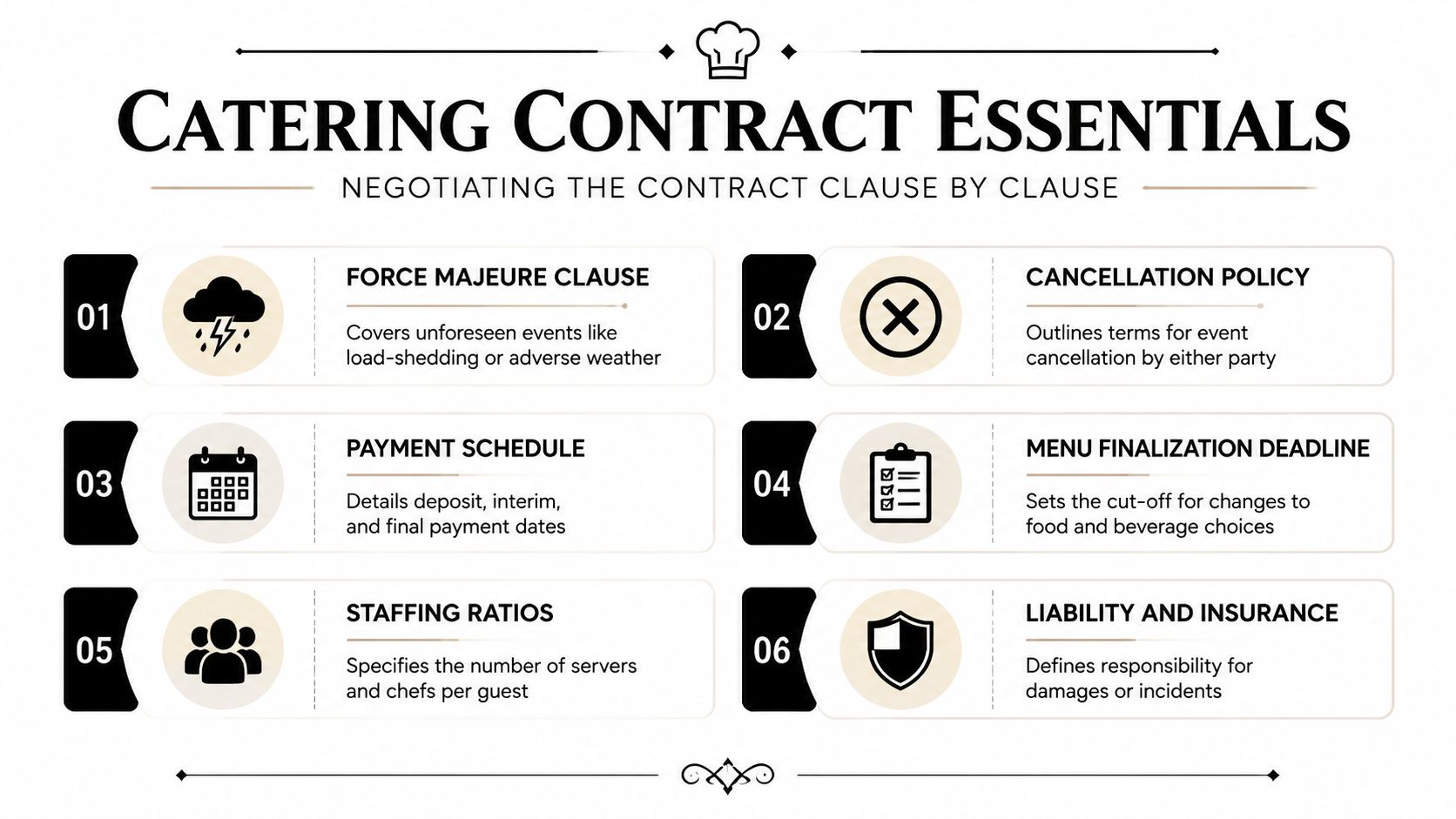
Payment schedule should be explicit. Deposits, interim payments, and final settlement dates need to be clear so no one is chasing paperwork a week before service.
Cancellation and postponement terms matter because venue changes are common in real life, especially when weather or logistics force a shift. You want to know what gets forfeited, what can move, and what needs written approval.
Minimum spend is a negotiation point because it can inflate smaller events. If the caterer works with a threshold, ask what parts of the quote are fixed and what parts can scale.
Staffing ratios affect the speed and quality of service. If the contract doesn't define who is on site, you can't accurately compare quotes.
Corkage and alcohol licensing need clear wording. If the venue has restrictions or the caterer is handling bar service, the paperwork has to match the reality.
Dietary substitution policy should say how allergies and special diets are managed. “We'll sort it on the day” is not a policy.
The integration clause is the one planners forget
The most useful line in the contract often has nothing to do with food. It's the clause that confirms the caterer will coordinate load-in, power access, and breakdown with the furniture and equipment partner. That is where a platform such as catering agreement software by Closer Innovation Labs can help organise signatures and version control, but the content still has to be tight.
Force majeure deserves careful reading too. Cape Town events live with weather risk, power interruptions, and site-specific constraints. The clause should say what happens if the venue becomes unusable, if service has to be delayed, or if equipment needs to be rescheduled.
Negotiation lever: if a clause feels one-sided, ask how the caterer handles the same risk on other events. The answer usually tells you whether the term is standard or just protective language.
The best contract is not the shortest one. It's the one that leaves no room for surprise when the day gets busy.
Building the Run-of-Show Timeline
A catering plan only works on paper if the run-of-show ignores the rest of the event. The kitchen, furniture hire, climate control, power access, and guest movement all have to line up. If one of those pieces drifts, service gets messy fast.
Start with load-in, not guest arrival
Build the timeline from service backwards. Caterers usually need a long lead time before guests arrive because they are setting equipment, checking power, preparing cold storage, and organising plating space. If you only work from the doors opening, the setup will always feel rushed.
The rental partner has to move in around the same window. Tables need to be in place before the kitchen can map the flow, chairs cannot block the load route, and climate control has to support the room without blowing straight into the food line. On a site with a narrow entrance or a shared driveway, delivery timing matters just as much as the menu brief.
A run-of-show should also sit beside a broader planning document. See our detailed checklist at https://www.abchire.co.za/blog/event-planning-checklist-template/ so the catering schedule, venue tasks, and rentals are all working from the same page.
A simple working sequence
- Load-in and setup. The catering team needs enough space to establish prep zones and service points.
- Food prep begins. Cold items, hot items, and final garnish tasks need separate handling.
- Guest arrival and canapés. First contact should feel calm, not improvised.
- Main course service. Staffing and timing need to be fixed by this point.
- Dessert and coffee. The room should already be clear enough for a clean transition.
- Pack-down. The caterer and rental team should know exactly who clears what and when.
For a 150-guest corporate function in Cape Town, the safer approach is to build buffer time into every handover. That does not make the event feel slow. It gives the kitchen room to absorb a late speaker, a delayed delivery, or a short interruption without throwing service out of balance. If the venue has outdoor sections, fans or heaters need to be placed with the food flow in mind, not added after the service plan is already fixed.
A tight schedule leaves no room for guesswork. The timeline should go to every supplier, including the furniture and climate control team, before event day begins. If one supplier is improvising, the rest of the room feels it.
Dietary Needs, Permits, and the Final Coordination Layer
The final coordination layer is where a good plan becomes a safe one. Dietary tracking, permits, waste handling, rental handoff, and the service timeline all sit in the last mile, and that is usually where pressure shows up first. A catering decision only works if the food, the furniture, the power, and the climate control are all moving on the same schedule.
Build the dietary matrix early
RSVP data should not sit in a general email thread. It needs to become a clean dietary matrix with names, allergies, preferences, and the level of risk involved. Severe allergies should be briefed directly to the caterer and the service lead, not buried inside a spreadsheet. The safest events keep substitutions simple, visible, and easy to plate without slowing the line.
A practical question is whether the kitchen can mark and plate special meals without holding up the rest of the room. If that answer is vague, service speed will suffer. Good caterers build the adjustment into prep flow, not as a last-minute add-on, and the same applies to venue staff who need to know which plates leave the pass first.
Keep the compliance and waste piece practical
Food safety permits, alcohol licensing, and venue-specific requirements should be checked before anything is loaded into the truck. A wedding or corporate event guide such as find wedding guidelines for businesses can be useful as a reminder that guest-facing food service always sits inside a rules framework, even when the format changes from one venue to another. In Cape Town, that framework should be matched to the specific venue, not guessed from a template.
Waste management deserves the same seriousness. Lower-waste planning is not just a branding choice, because it affects cost, clean-up, and how much material leaves the site at the end of the night. Seasonal sourcing, reduced packaging, and simpler service ware can help the budget as well as the waste stream when the plan is built properly.
If the event needs cold storage for ingredients, beverages, or plated items, the fridge hire conversation should happen in this final layer too. Temperature control, storage space, and delivery timing all affect food safety and service quality at the same time, especially when the venue is hot, the bar is busy, or the kitchen footprint is tight.
Use a final handoff checklist
Two weeks before the event, and again on the morning of, confirm these points:
- Dietary labels. Every special meal is named and mapped.
- Service route. The caterer and rental team know where they move, and in what order.
- Licensing and permissions. Alcohol and food service requirements are confirmed.
- Waste plan. Clear bags, disposal points, and pack-down responsibility are assigned.
- Cold storage. Fridges or holding equipment are on site and tested.
That final handoff keeps Cape Town events calm when the room fills up and the schedule starts moving. The event feels smooth because the logistics were already made boring, and the caterer is not trying to solve rental gaps while service is under way.
When the rental side needs to support the food plan properly, ABC Hire supplies tables, chairs, fridge hire, urns, and climate control that fit the same on-site realities discussed here. Visit ABC Hire and line up the equipment side before your caterer starts building the service plan.